
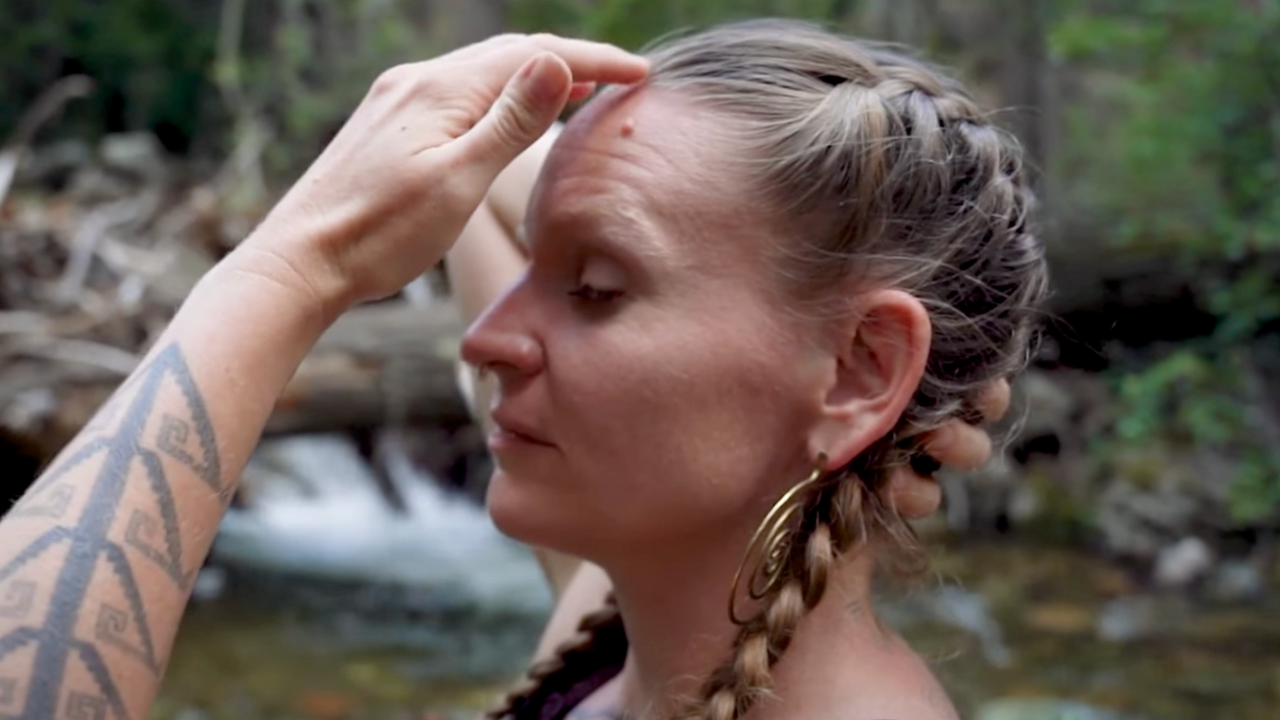
Just the Cortices: A Practitioner's Guide to the Brain Beneath Our Hands
Nov 03, 2026For Certified BodyTalk Practitioners and BodyTalk students: the anatomy and physiology under our most-used technique, and why it belongs in every day of our practice.
Every one of us learned the Cortices in our first class, and most of us could do it in our sleep. That is exactly the problem. Because it is so familiar, we rarely stop to ask what is actually happening under our hands. In Access and in Fundamentals there is only time to teach the form: link the right and left hemispheres to update the brain's picture of the body, wake up the cold spots so brain and body can communicate, and help normalize the nervous system so the body can shift from defense into growth and repair. That is the whole technique, and it is enough to change lives. But there is a much bigger map underneath it, and the better we know that map, the more we notice in our clients, the more precisely we can follow the protocol when it asks for details more specific, and the more convinced we become that this standalone technique deserves a place in every day of our lives.
I write this as someone who has lived inside this technique for twenty-five years, as a practitioner and just as often as a client. I tap my Cortices every day, morning, noon and night. In the morning it aligns me for the day. At noon it clears whatever the morning stacked up. At night it settles me toward sleep. It is how I find alignment, clarity and focus, and it is the first thing I reach for in every challenge and every growth phase of my life. As we go, I will tell you where it has mattered most to me, because the anatomy means more when you know what it has carried someone through.
So this is the overview I wish we had time for in class. I want to walk the brain with you the way our hands do: lobe by lobe, then across the two hemispheres and the bridge between them, then down into the limbic system and the amygdala, and finally out into what happens in a body that cannot get out of stress. Read it slowly, take notes, and come back to it. Every section is a set of doors the innate might open in a session.
The cortex: the bark of the brain
Cortices is a plural: we are working with the cortex, the outer layer or bark of the brain that is constantly checking in with the whole body. As our hands move through the positions, each one brings focus to a different part of that cortical layer. When the protocol asks for details more specific, knowing what each lobe does lets you name, and notice, much more.
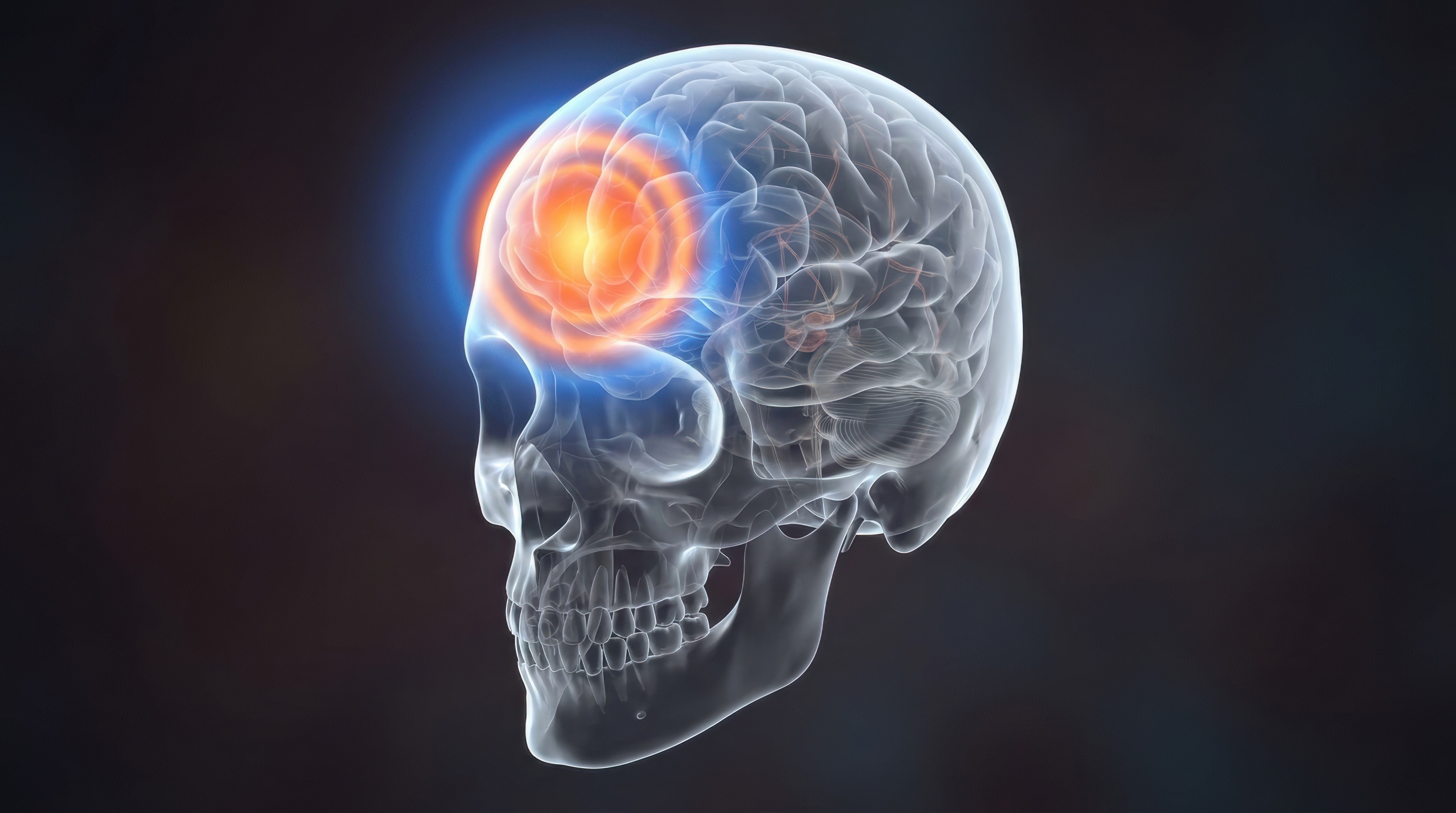
The frontal lobe, under our last hand position, is the command center. It carries executive function: planning, decision-making, problem-solving, reasoning, setting goals and managing tasks. It carries voluntary movement, through the primary motor cortex in the precentral gyrus, including the fine coordination of the muscles of speech. Broca's area, usually in the left frontal lobe, turns what we understand into spoken language, the bridge between what we know inside and what we can say. I see this come up often with children whose speech is delayed or who are under extra stress and struggling to communicate, and it echoes all the way into adulthood in how freely we can express ourselves. The frontal lobe also governs emotional regulation and impulse control, our reading of social cues and norms, and our attention and concentration, so think of clients with attention challenges and ADHD. The front of the frontal lobe shapes personality and social behavior, how we feel about ourselves and how that shows up among other people, including our moral and ethical decision-making. When clients come in stressed by conflict at work, by not fitting in with their family, or by feeling disconnected from their community, the frontal lobe and its balance across the hemispheres may be part of the story. Finally, it holds working memory, the ability to keep information in mind long enough to solve the problem in front of us and move to the next step. In short, the frontal lobe is how we meet what is right at hand and express ourselves authentically amid all the differences we navigate in a day.
This is the lobe I lean on hardest as a mother of four running a busy, entrepreneurial life. On the days when the planning, the decisions, the deadlines and the small humans all arrive at once, a midday Cortices is how I get my executive function back.
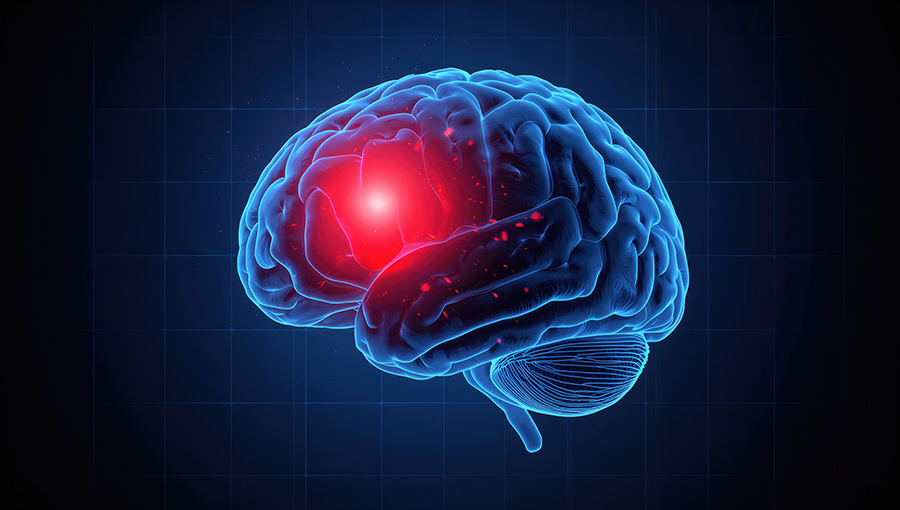
The parietal lobe is where sensation becomes understanding. Its primary somatosensory cortex, in the postcentral gyrus, takes in touch, temperature, pain and pressure, the felt experience of being in a body. It gives us spatial awareness, the sense that lets you walk to the bathroom in the dark without hitting the dresser. It integrates sight, sound and touch into one coherent picture of our surroundings so we can respond appropriately. It is central to body awareness and proprioception, the sense of where our parts are and how much force a movement needs. I work with this constantly with martial artists, who have to read conflict through the body, and it is vital in early childhood, when young ones are learning how their force affects the world. The parietal lobe also lets us recognize objects by touch, smooth, wet, round, rough; supports language processing alongside the frontal lobe, especially on the left; and carries mathematical, spatial and analytical reasoning, pattern recognition and problem-solving. Science has long described the left parietal lobe as more dominant for language. The interesting question for us is what becomes possible when we balance both sides.
For years I have tapped my Cortices before every training session and every sparring round. It puts me in a neutral space: present in my body, reading distance and force clearly, without the old charge of fear or ego running the show. Whatever happens in the ring, I meet it from there.
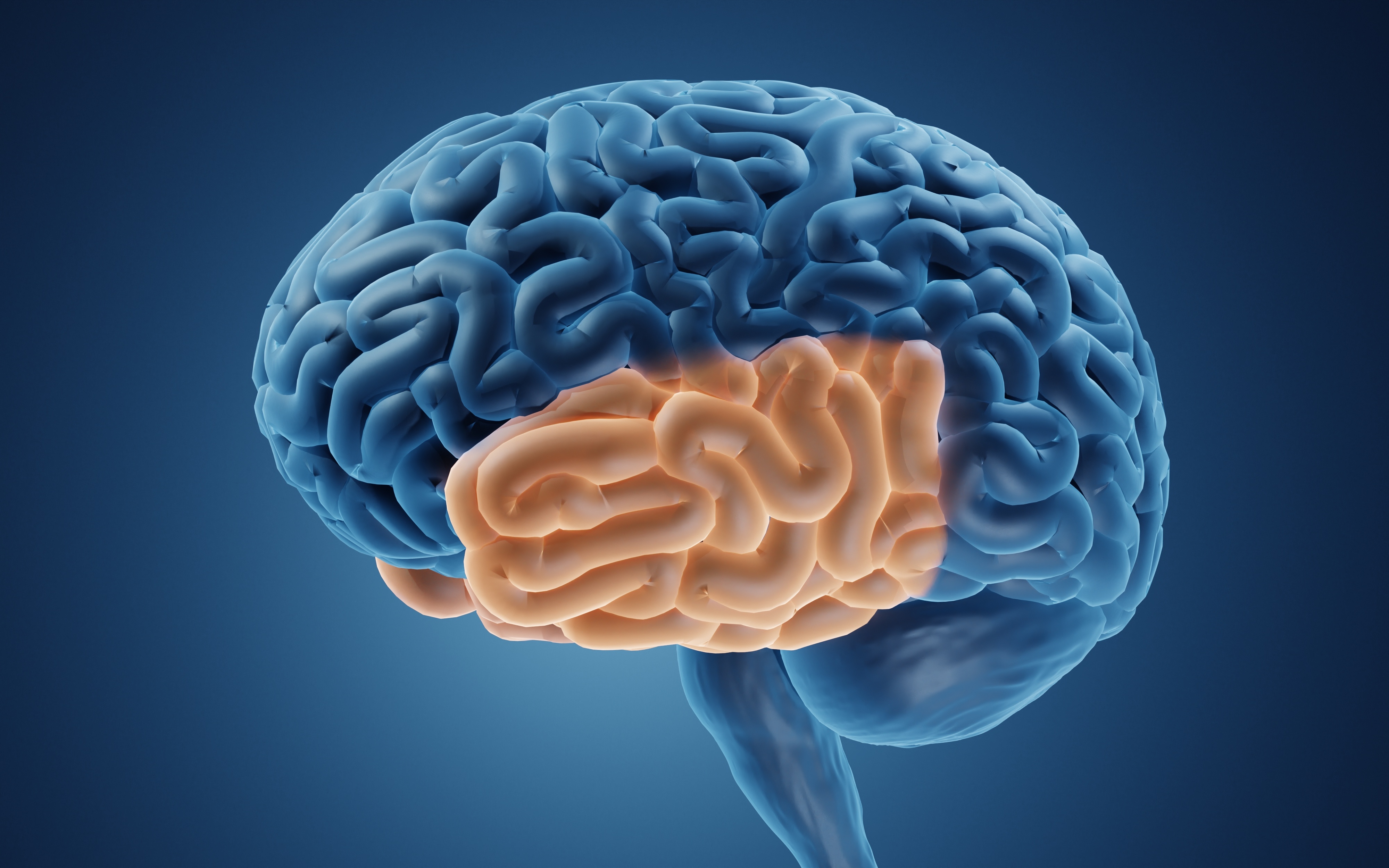
The temporal lobe, low on the sides of the head behind the ears, processes what we hear: pitch, volume, and where a sound is coming from, near or far, left or right, almost like sonar. It lets us understand spoken and written language. With the hippocampus tucked deep inside it, it forms new memories, retrieves old ones and moves short-term and working memory into long-term storage, which makes it central to learning, especially in a culture that teaches mostly by talking at us. It is wired into the limbic system and helps link memories to emotional responses, which makes it a rich area for active memories in our sessions. It helps us recognize faces and objects and feel safe among familiar ones; when we land among new faces, a new culture or a new language, this lobe is working overtime. It also remembers where things are and how to get around. The client who can never find their keys, or who gets lost on a route they have driven ten times, may be telling you something about the temporal lobe.
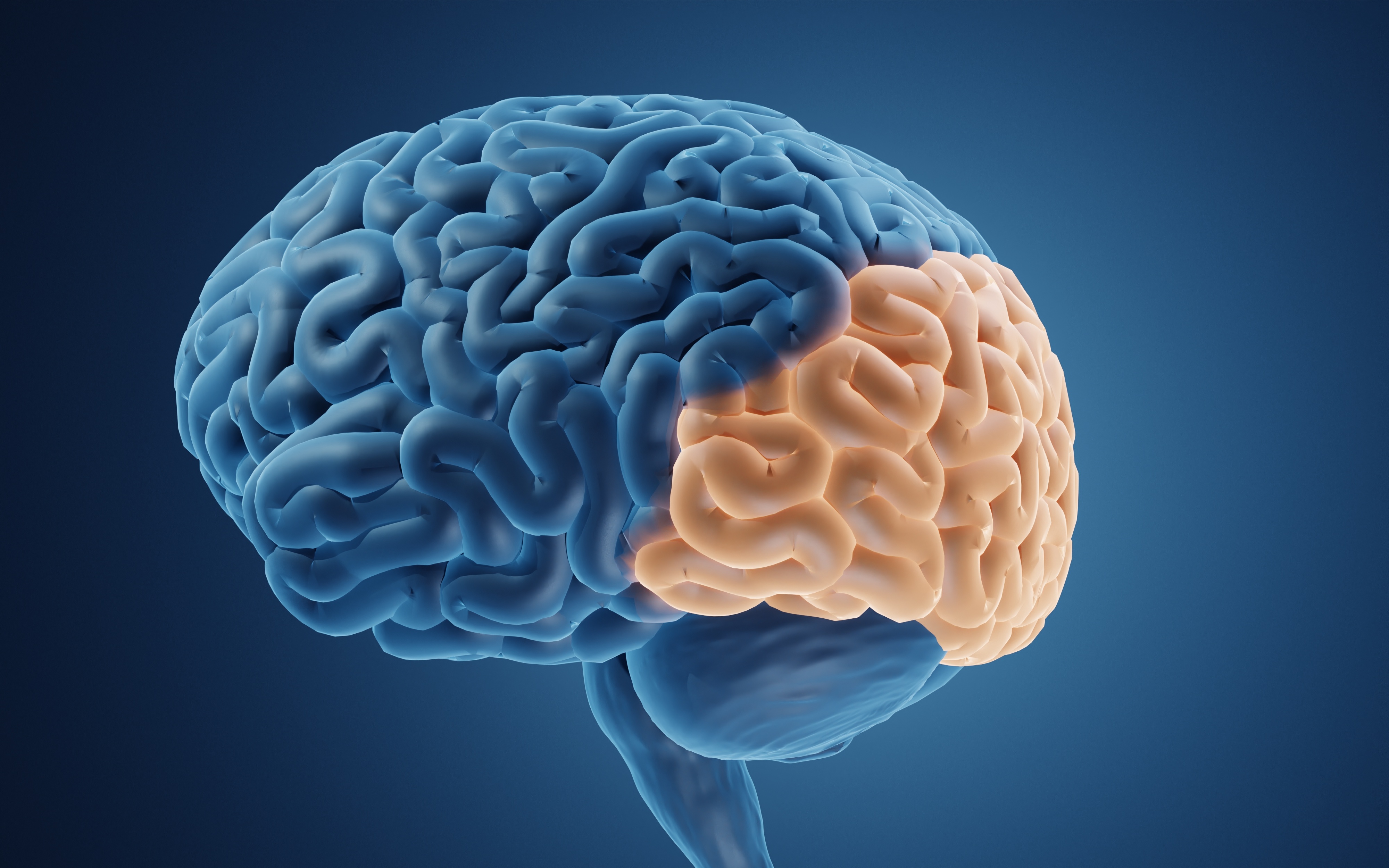
The occipital lobe, at the back of the head under our first hand position, holds the primary visual cortex. It receives and interprets what the eyes send it: light, color, movement, shape, depth, motion. It stores visual memory, so we can compare what is in front of us with what we have seen before, and it combines vision with the other senses into a full picture of our surroundings. It also tracks where objects are and how they move in the visual field. In other words, it gives us not only sight but visual cognition, the ability to make sense of what we see and to find our place in the world by it.
Two hemispheres and the bridge between them
Every lobe has a right and a left, and each side leans toward its own specialties, so the map multiplies: the right temporal, the left parietal, the right occipital. That gives you another layer of possible details more specific. The left hemisphere tends toward language and speech, analytical and sequential thinking, detail, mathematics and verbal memory; it is the driven, yang mode of mind. Because the motor pathways cross at the brain stem, it moves the right side of the body. The right hemisphere tends toward space, depth, distance and navigation, both literally and as a metaphor for knowing where we are in our lives. It leans toward music, art and big-picture thinking, toward reading emotion, facial expression and tone of voice, and toward visual and spatial memory, places and faces, and it moves the left side of the body. Those are tendencies, not walls; a healthy brain is constantly trading between the two. That trade is what whole-mind thinking means, the marriage of intellect and intuition, yin and yang, that we rely on for clear neutral muscle checking. So many clients are stuck in one way of thinking. Balancing the Cortices invites the other side into the conversation and opens possibilities that were not there before. I also see the physical version all the time from years of teaching movement and running a martial arts school: one side that always outperforms the other. Cortices can help develop both.
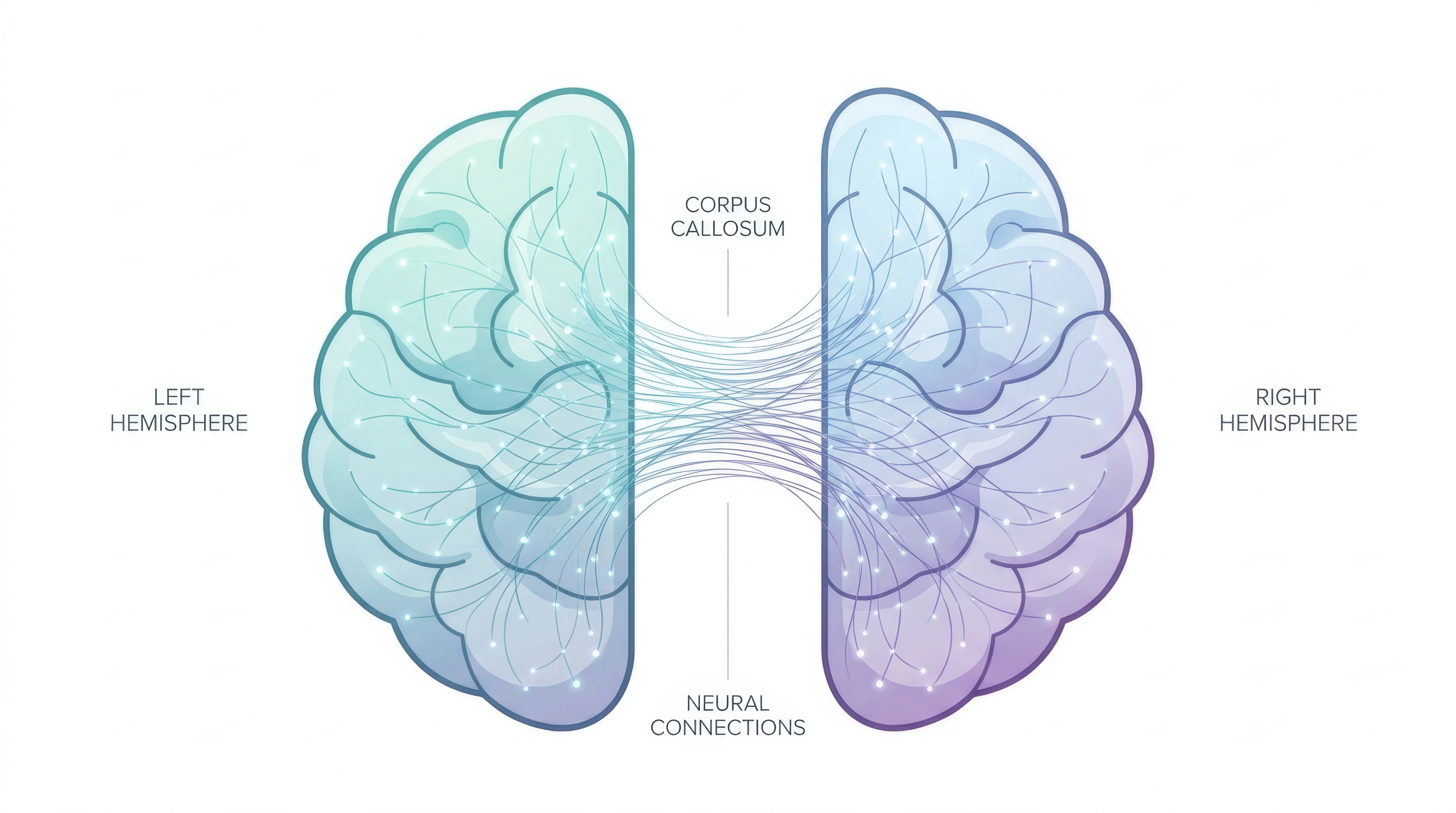
The bridge between the hemispheres is the corpus callosum, a thick band of nerve fibers deep in the middle of the brain. It begins forming in the womb, around the twelfth week of gestation, from a structure called the lamina terminalis, and it keeps maturing and myelinating into the teen years. Myelination is the key. Each time a pathway fires, its insulation builds and signals travel faster, so the corpus callosum is literally shaped by repetition. That means details more specific can lead us all the way back to gestation and early childhood, to what was being laid down while those fibers were wiring.
What builds a healthy corpus callosum is worth teaching every parent you know. Rich sensory input, real sights, sounds and textures, not a constant blare of screens, matters. So does movement, above all cross-lateral movement, because the right side drives the left and the left drives the right. In my clinical work I have often seen people with attention or cognitive challenges who spent little time crawling, or who were put in walkers and bouncers and pushed toward standing before they were ready. If the innate leads you there, you can work back to those developmental periods, and you can suggest primal and cross-lateral movement, which helps adults too. Warm, responsive caregiving, being read to and played with, and peer play and games all strengthen it. Language exposure, conversation, storytelling, reading aloud and especially bilingualism all ask both hemispheres to work together, and some research suggests bilingualism shapes the corpus callosum itself. Problem-solving and new skills, like puzzles, music, sport and art, build it too, as do exercise, which supports blood flow and the growth of new neurons, and good nutrition, with its fats, vitamins and minerals, in childhood above all. Stress and the emotional environment matter as well; chronic stress and adverse childhood experiences work against all of it. In my martial arts school, I notice that children who grew up mostly on tablets, or isolated and behind masks during the pandemic years, often find it harder to take in new skills and read the room. We are going to see more of this, and enrichment, unscheduled play, sport, music and art are part of the answer.
When the corpus callosum does not form or is damaged, the consequences can be significant. In agenesis of the corpus callosum it is partly or entirely absent, and in callosal dysgenesis it forms abnormally; both can affect coordination, communication, sensory integration and social behavior. In split-brain cases, where it is surgically cut to treat severe epilepsy, a person may be unable to name an object seen only in one half of the visual field. That extreme case is a powerful image for what we do. So many of us live with a functionally split mind, one-track ways of thinking carved by trauma and adaptation, and I think of every Cortices balance as a way of healing the split mind. Multiple sclerosis can demyelinate the fibers of the corpus callosum, affecting cognition, coordination and sensation. And traumatic brain injury is far more common than we diagnose. Childhood falls and knocks to the head we shrugged off, whiplash and closed head injuries can all damage those deep fibers, changing cognition, behavior and communication between the hemispheres. Keep TBI on your radar, and remember that every time you balance the Cortices, you may be supporting how this bridge works.
Down into the limbic brain
When our hands rest on the sides of the head, we sink toward the limbic system, not a single part but a set of structures deep in the core of the brain. It governs emotion, memory and a great deal of our autonomic function, and it is intimately tied to the intelligence of the immune system. These structures can be details more specific in their own right, and their functions can be places of definition.
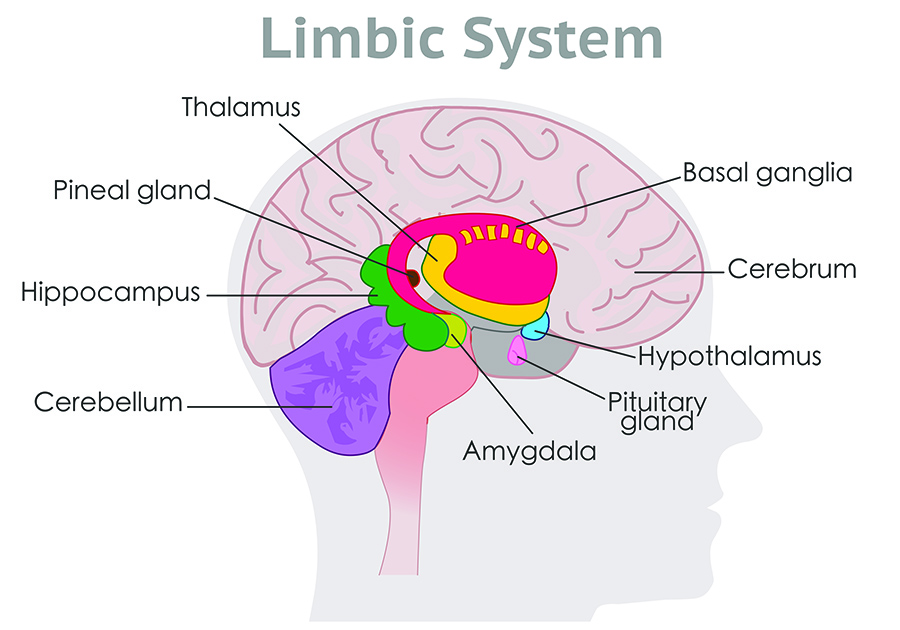
The limbic system processes and regulates our core emotions, fear, pleasure, anger and joy, and shapes how strongly we react to what happens. Through the hippocampus it forms and recalls memories, converting short-term into long-term memory and mapping where we are in space, which makes it a natural link for active memories and for anyone who wants to learn more easily. It runs motivation and reward, which makes it central to addictive patterns of every kind. This is where behaviors get reinforced, the good and the bad, because it is so tightly wired to pleasure. Part of our work is helping clients get rewarded by healthy patterns instead of harmful ones. It drives our survival behaviors: eating, sleeping, sex, reproduction and caring for our young. That makes it relevant to fertility, creativity and motivation, and very much to postpartum depression, where a woman's deepest survival instincts are activated in a modern world that rarely supports them. It governs empathy, social cues and bonding, the foundations of being held by a community. It drives the autonomic responses to emotion, heart rate, blood pressure and hormones, which is why excitement and fear can feel like two sides of one coin; the difference is in perception and what we attach to. It is wired closely to smell, which is why a scent can carry us straight into an old feeling. A grandmother's perfume, alcohol or cigarette smoke on someone who hurt us: olfactory triggers come up in active memory work again and again. And it governs the stress response. If you understand how the limbic system releases stress hormones, you can help unwind and recontextualize those pathways, so that people stop moving through the world inside a threat framework. Balancing this part of the brain is a big part of why Cortices can reshape a person's whole relationship to stimuli.
I have felt this in my own body four times. I used the Cortices through all four of my home births, to keep my survival brain from tipping into fear and to stay in conversation with the instinct that knows how to give birth. In my last birth, my eldest daughter tapped out my Cortices between contractions. It moved so quickly that the birth ended up unassisted, and it was the most peaceful, magical birth I have known. That is what a calm limbic brain can do in the most primal hours of a woman's life.
The amygdala: the gatekeeper
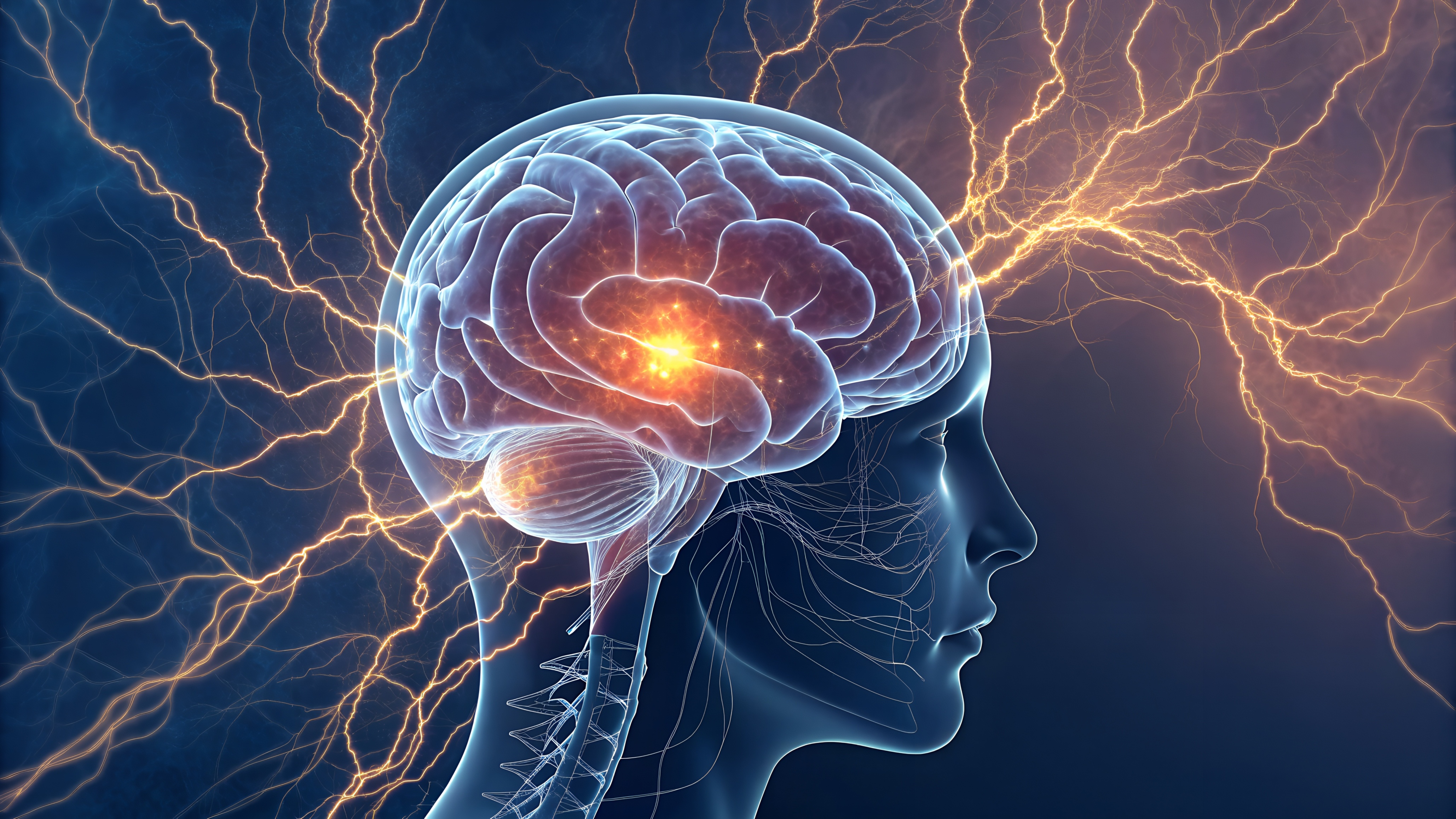
Deep in the limbic system sits the amygdala, a small almond-shaped structure that is the brain's gatekeeper. It assesses the emotional significance of everything coming in, above all for threat, and it decides how we respond. When it perceives danger, it triggers fight or flight. But perception of threat varies enormously. I was walking through the forest recently with a group of small children. One little girl was afraid of everything, the bugs, the cactus, the ground, the water, and you could watch her body tighten with every step. The boy beside her was picking up beetles, kicking the cactus and leaping across slippery rocks, laughing as he nearly fell in the creek. Same forest, two amygdalas. Much of that difference comes from memory, because the amygdala tags memories with their emotional charge so that similar feelings call them back up. When someone sees danger everywhere, it is fair to wonder what the amygdala has stored and is laying over ordinary life. The amygdala also helps us read other people's emotions and social signals, processes reward and positive reinforcement, and drives quick, instinctive decisions made on emotion rather than reasoning. We need that speed in a real emergency. We do not need it twenty-four hours a day, and many people now live in it around the clock. That takes a tremendous amount of energy and tension, and it builds resistance against healing and growth.
Daniel Goleman gave us the phrase amygdala hijack for what happens when the amygdala takes over. It registers a threat before the rational brain can think it through, often overlaying old references on new information. The limbic system goes on high alert and signals the hypothalamus, and adrenaline and cortisol flood the body: heart rate up, breath fast, attention narrowed to the threat. At the same time the amygdala dampens the prefrontal cortex. Research by Amy Arnsten and others shows that stress takes the reflective, reasoning brain offline. So we cannot reason our way out, and our impulse control and planning go out the window. We get tunnel vision and react, sometimes far out of proportion. Because the amygdala strengthens emotional memory, each hijack makes the next one easier, and anxiety builds on itself. The immediate results are heightened emotion, reduced rational thinking, a stress response in full swing, poorer memory processing, and changes in social behavior. Over time, research links chronic stress to a shrinking hippocampus, a weakened prefrontal cortex, altered neurotransmitters and disrupted growth of new neurons. You can work with each of these stages in a session, as feedback loops or by recontextualizing them, wherever the innate leads.
The moment I understood this most deeply came right after my third birth at home. My son was born in distress, with meconium, wrapped in his cord and not breathing. Time stopped. Every cell in me wanted to fall into the hijack. Instead my hands went to work. For about a minute I tapped his Cortices and rubbed his lung points, and it brought a cry and a deep first breath. I still cannot tell that minute without my voice catching. What I know is that the technique kept me out of my own amygdala long enough to act. I share this with you as practitioners with care: a newborn who is not breathing is an emergency that calls for neonatal resuscitation and emergency help, and our work stands beside that, never in place of it.
This is why John Veltheim created Access: to bring us out of amygdala hijack, not only in the brain but in the body's stress response, hydration, immune function and flow of energy. When I began teaching Access, John shared his conviction that doing the routine daily for two to three weeks straight could overhaul the whole amygdala framework and its impact on the body. The Cortices gets us most of the way there. And it is no accident that we hold the sides of the head for Hydration and Body Chemistry; we are anchoring into the amygdala's distortions so they can be repaired.
When the body cannot get out of stress
Here is where it all comes together. Research consistently links chronic stress to a wide range of conditions, from the classic work of Bruce McEwen on the wear and tear of stress to the review by Sheldon Cohen and colleagues in JAMA. Look at the list and you will recognize most of what walks into our clinics. Heart disease and stroke, as heart rate and blood pressure stay elevated. Anxiety disorders, depression and PTSD, as the circuitry of threat and mood stays out of balance. We can chase neurotransmitters with medication and food, but if the nervous system framework is out of balance, the foundation is still cracked. Digestive problems, IBS, inflammation and disturbances of the microbiome, because digestion all but stops in fight or flight. Immune dysfunction, more infections and autoimmunity; I cannot count the women who have come to me with thyroid issues, chasing medications, supplements and diets while their stress framework stayed unaddressed. Metabolic conditions, insulin resistance, type 2 diabetes and weight gain. Chronic pain, fibromyalgia, tension headaches and back pain. I have been a manual therapist for most of my adult life, and I can tell you that if the nervous system will not let go, the muscles go right back to bracing no matter how skillfully you work them. Neurodegeneration, with the oxidative stress of chronic stress associated with dementia and Alzheimer's. And sleep, where we grow, repair and restructure, the first thing to go when the amygdala will not stand down.
I would argue that this stuck stress response sits beneath almost every chronic condition our clients bring us. That is why it matters so much that the nervous system be working with us. When it is, every other therapy a person tries actually has a chance to work.
Putting it to work
So here is my soapbox. Do your Cortices. Do them every day, several times a day if you can, and always before your sessions so you arrive with a quiet amygdala and a whole mind. Do them before and after massage, acupuncture, training or learning anything new, and get the amygdala out of the way so you can grow. Teach them to every client, so they leave with a tool they can use the moment stress hits, in between sessions and for the rest of their lives. Teach them to your family. My own children learned them by watching me, and now they reach for them on their own. We are living in an age of more information and more perceived threat than any humans before us, and our amygdalas are overwhelmed. Teaching people to balance their own brains is one of the clearest ways we can teach them to fish.
The Cortices has carried my family through twenty-five years of ordinary life, too: the bumps, bruises, cuts and little injuries of four children, a dojo and a homestead. Again and again I have watched it help stop bleeding, bring down swelling and get healing started right away. It carried me through the floor of postpartum depression, five minutes at a time, when I could not manage anything bigger. And it is how I hold a full, entrepreneurial life as a mother of four without losing myself in it.
This is why Cortices is the most-used technique in BodyTalk and why it stands on its own. In one short routine it balances the hemispheres, supports the exchange across the corpus callosum, wakes up the function of every lobe, tones the nervous system and calms the amygdala, so the body can move into growth and healing. It is quick, it is effective, and anyone can use it. The next time you tap, hold this whole map in your awareness: the bark of the brain, the two halves and the bridge between them, the deep limbic core and the little almond-shaped gatekeeper. Notice what the innate shows you. You will find more details more specific, and you will see more change, than you ever expected from something you learned on your first day.
What has the Cortices shown you that surprised you? Reply and tell me, or bring it to the next practitioner table.
Be well,
Elza
Elzabieta Kosmicki, LMT, AdvCBP, CBI
For Certified BodyTalk Practitioners and BodyTalk students. Educational, drawn from my training, teaching and clinical experience.
Sources: McEwen BS, Protective and damaging effects of stress mediators, New England Journal of Medicine, 1998. Cohen S, Janicki-Deverts D, Miller GE, Psychological stress and disease, JAMA, 2007. Arnsten AFT, Stress signalling pathways that impair prefrontal cortex structure and function, Nature Reviews Neuroscience, 2009. Goleman D, Emotional Intelligence, 1995.
Is Your Blanced Your Brain Today?
Explore our complimentary BodyTalk Cortices 1-minute brain harmonizing micro-course
